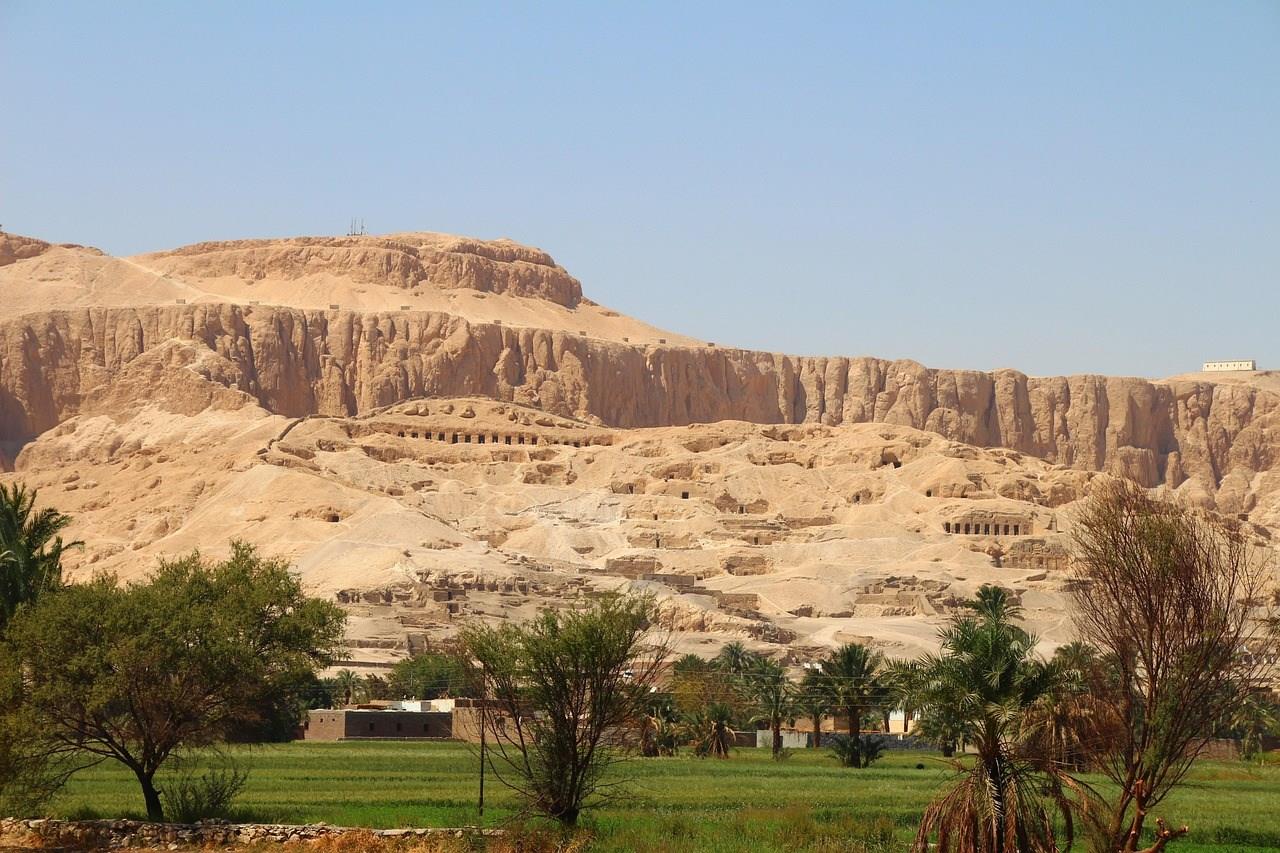
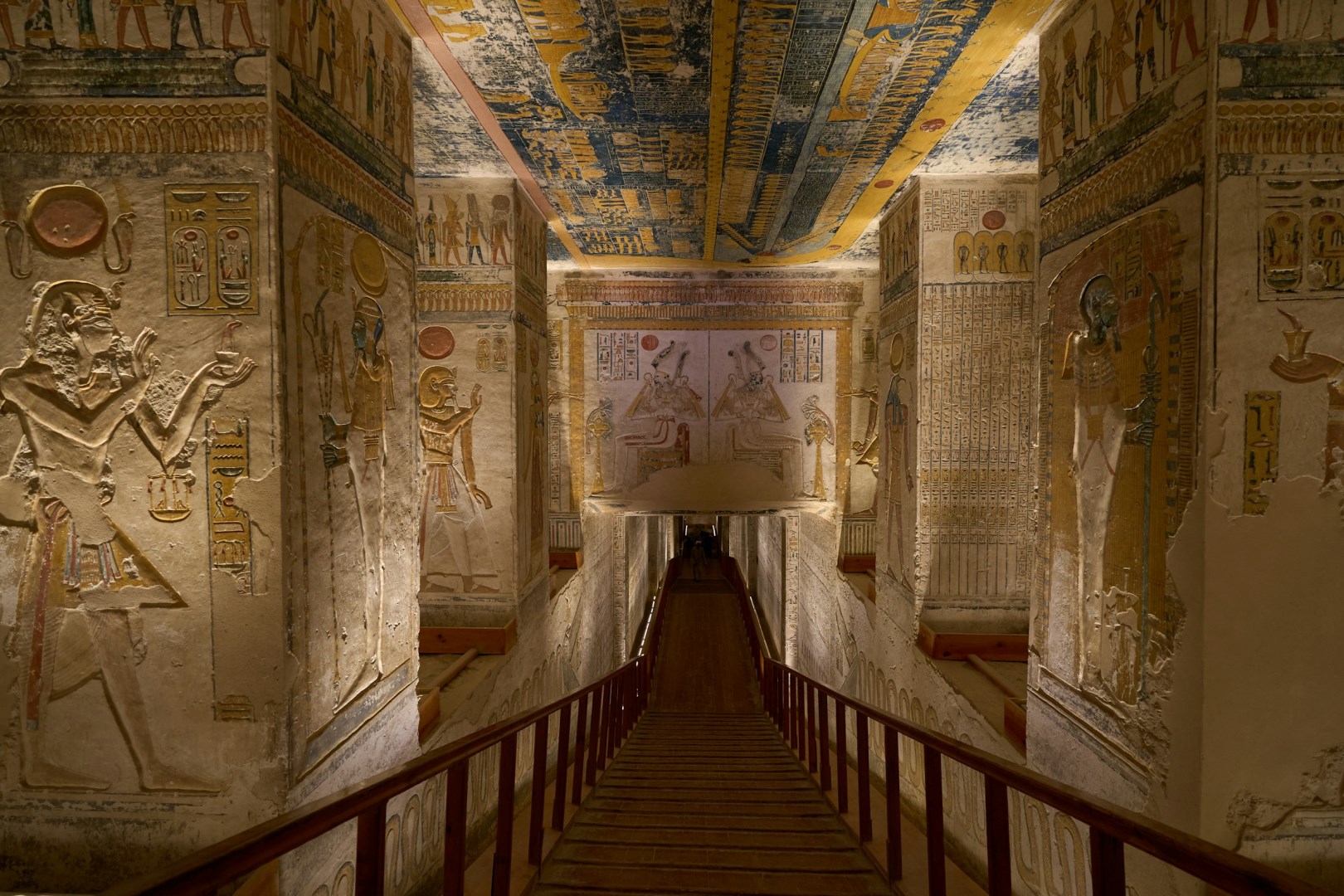
The Valley of the Kings and the Valley of the Queens, located on the west bank of the Nile near Luxor, Egypt, are two of the world’s most significant archaeological sites. For over 500 years during the New Kingdom (16th–11th centuries BCE), these valleys served as the burial grounds for pharaohs, queens, and high-ranking nobles. Hidden within the arid cliffs, their tombs were designed not only as final resting places but also as elaborate passageways to the afterlife, decorated with vivid hieroglyphs and symbolic art that remain remarkably well preserved.
The Valley of the Kings is the more famous of the two, containing over 60 tombs, including that of Tutankhamun, whose discovery in 1922 by Howard Carter revealed treasures that continue to fascinate the world. The Valley of the Queens, though smaller, holds equally impressive sites, most notably the tomb of Queen Nefertari, often called the “Sistine Chapel of Ancient Egypt” for its richly detailed and colorful wall paintings. Together, these valleys offer unparalleled insight into the beliefs, artistry, and power of ancient Egyptian civilization.
Walking through the valleys, visitors are struck by the stark beauty of the desert setting, where golden cliffs conceal chambers filled with mythological scenes of gods, journeys through the underworld, and invocations of eternal life.