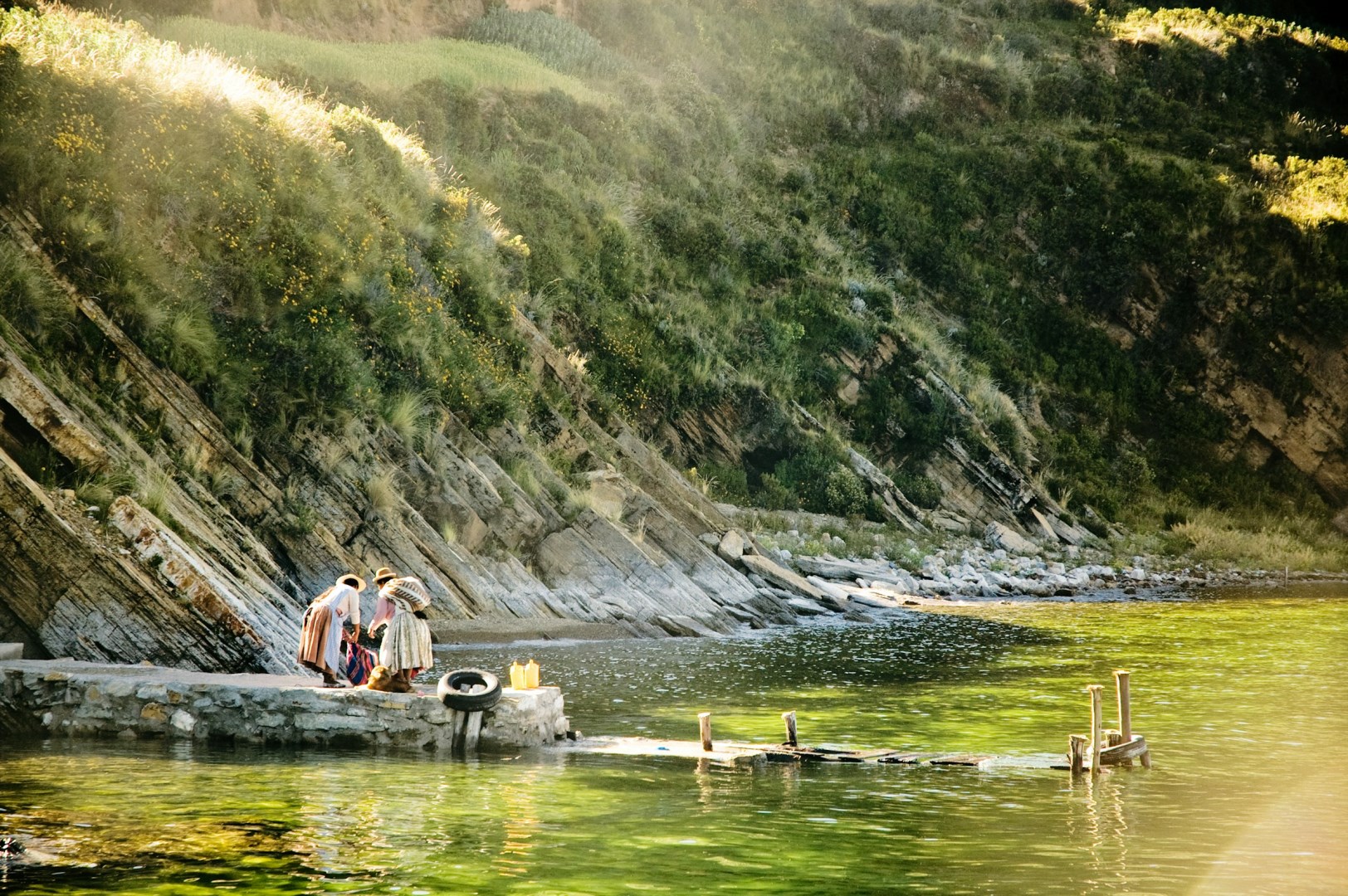
Lake Titicaca, perched at over 3,800 meters above sea level, is the highest navigable lake in the world and a place where ancient stories still echo across the water. Shared by Bolivia and Peru, this lake has long been considered sacred by the Andean peoples. According to Inca legend, it was from Titicaca’s deep blue waters that the first humans were created. Today, the lake remains a center of cultural tradition, spiritual significance, and daily life for many who live along its shores.
On the Bolivian side, the town of Copacabana serves as a key jumping-off point. Copacabana is also home to the famed "Blessing of the Vehicles," where drivers line up to have their cars decorated and doused with beer and flower petals. Just offshore, Isla del Sol (Island of the Sun) offers a slower pace and historic significance. Visitors can walk ancient Inca trails, explore terraced hillsides, and visit the Pilkokaina ruins, all while watching the sun sink behind distant snow-capped peaks.
Lake Titicaca’s air is thin but crisp, and its scenery has a quiet stillness that’s hard to find elsewhere. Whether walking through eucalyptus groves on Isla del Sol or sitting in a wooden boat as traditional reed islands drift in the distance, visitors often find the lake invites reflection as much as exploration. With its blend of pre-Columbian heritage and living traditions, Lake Titicaca continues to shape the identities of those who live beside it and those who come to experience its quiet majesty firsthand.